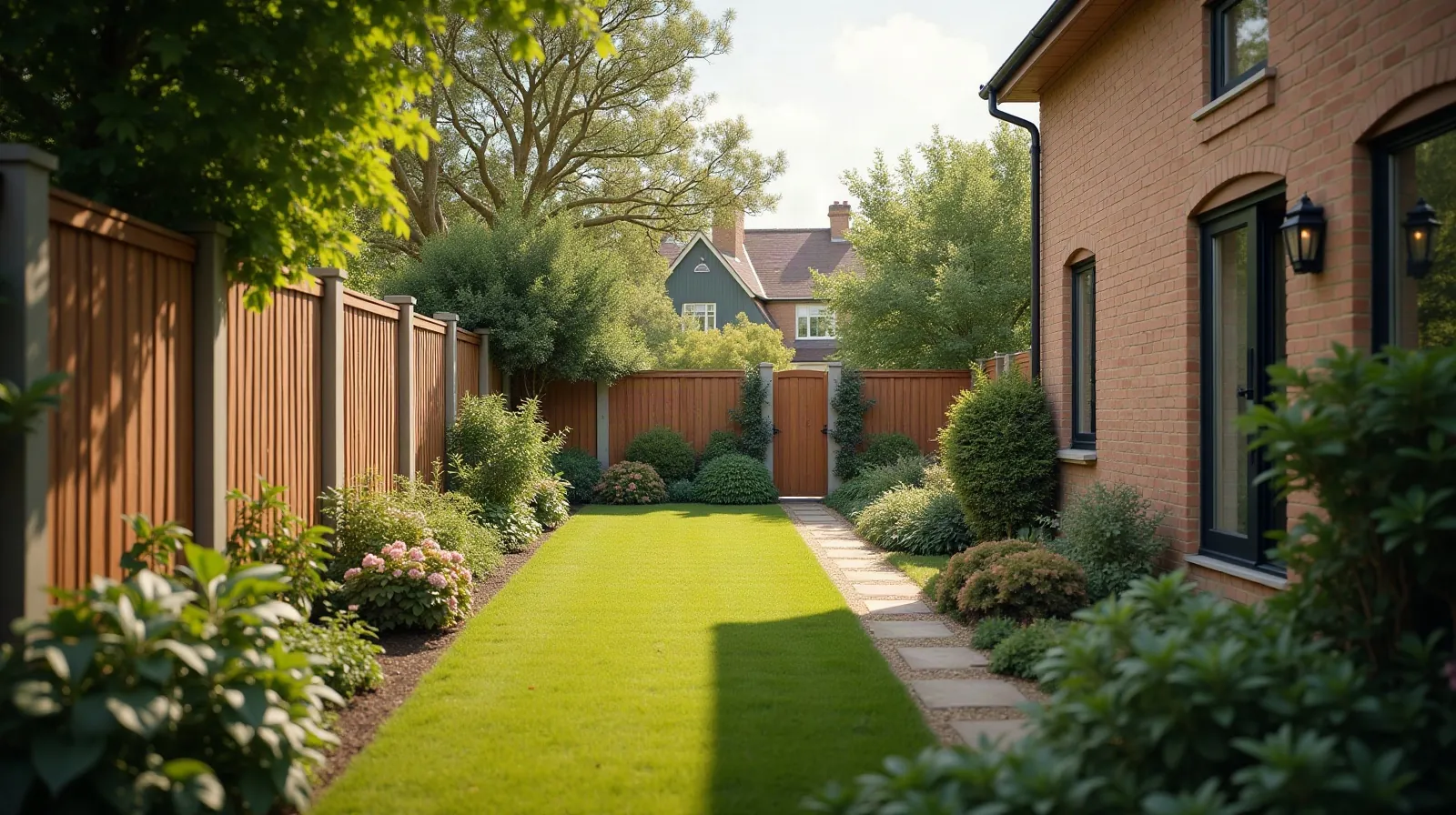
For most homes in England, a garden fence or wall is permitted development up to 2 metres above ground level, but only 1 metre if it is next to a highway used by vehicles. If you are replacing or raising an existing fence, the new height cannot exceed the former height or the 1 or 2 metre limit, whichever is greater.
The height limits
For a house in England, a garden fence, wall or gate is permitted development if it is no more than 2 metres above ground level. This 2 metre limit applies to the whole structure, measured from the natural ground level where it stands. If the fence or wall is next to a highway used by vehicles, the limit is 1 metre instead. You should measure carefully before you build, because a fence that exceeds the limit may need planning permission.
The 1 metre limit applies when the fence, wall or gate is next to a highway used by vehicles. This includes a road, and it can include a driveway that is a highway. If your boundary is next to a public road, check the height limit that applies to that boundary. The 2 metre limit applies elsewhere, such as between your garden and a neighbour's garden or a public footpath that is not a highway used by vehicles.
These limits are the permitted development limits. They do not override any condition on a previous planning permission, and they do not override an Article 4 direction. Your local council can confirm whether permitted development rights still apply to your property. If the rights have been removed, you need planning permission for a fence or wall that would otherwise be permitted development.
Fences next to a road or driveway
If your fence or wall is next to a highway used by vehicles, the permitted development limit is 1 metre above ground level. This is lower than the 2 metre limit that applies elsewhere. You need to identify whether the boundary is next to a highway used by vehicles. A road is the most common example. A driveway that is a highway may also be covered, so check with the council if you are unsure.
A gate that forms part of the boundary is subject to the same height limit as the fence or wall. If you are replacing a fence next to a road, the new fence cannot be higher than the former height or the 1 metre limit, whichever is greater. This means that if the former fence was already higher than 1 metre, you may be able to replace it at that former height, but you cannot raise it further without permission.
The 1 metre limit is measured above ground level. You should measure from the ground at the base of the fence or wall, not from a raised bed or paving. If the ground slopes, measure at each point along the boundary. If any part of the fence or wall exceeds 1 metre next to a highway used by vehicles, that part may need planning permission.
Replacing or raising an existing fence
Altering or improving a fence cannot take it above its former height or the 1 or 2 metre limit, whichever is greater. This rule applies when you replace or raise an existing fence. If the existing fence was already higher than the permitted development limit, you may be able to replace it at the same height, but you cannot make it higher without permission. If the existing fence was below the limit, the new fence can go up to the limit.
You should record the former height before you remove the existing fence. Photographs with a tape measure can help. If you later need to show that the new fence is no higher than the former one, this evidence is useful. The rule compares the new height with the former height and with the 1 or 2 metre limit, and the greater of those two figures is the maximum height allowed.
If you want to raise a fence above its former height and above the permitted development limit, you need planning permission. The same applies if you want to raise a fence above the former height when the former height was already above the limit. A lawful development certificate can confirm that a proposed replacement or alteration is lawful, but the council will assess it against these rules.
Listed buildings and protected areas
Fences, walls and gates within the curtilage of, or surrounding, a listed building need permission. This means that permitted development rights do not apply to these structures in the same way. You should check with the council before you build or alter a fence, wall or gate at a listed building. The permission needed may be listed building consent, and you should ask the council which permission applies.
Article 2(3) land has tighter rules. This includes National Parks, the Broads, Areas of Outstanding Natural Beauty, conservation areas and World Heritage Sites. In these areas, permitted development rights are more restricted, so you should check with the council before you rely on the 1 or 2 metre limits. The council can confirm whether your property is in one of these areas and what rules apply.
Councils can remove permitted development rights with an Article 4 direction. Earlier permissions may also have removed them. You should check with the council first, because if the rights have been removed, you need planning permission for a fence or wall that would otherwise be permitted development. This check is important in protected areas and for listed buildings.
Neighbours, boundaries and party walls
A party wall notice is needed for building a new wall on the boundary. The notice must be given between 2 months and a year before work starts. This gives the neighbour time to respond. If you are building a new wall on the boundary, you should serve the notice within this period. The notice is a formal step under the party wall rules.
Garden walls count as party walls when they stand on the land of 2 owners. Wooden fences do not count as party walls. This means that the party wall notice requirement applies to a wall that straddles the boundary, but not to a wooden fence. If you are unsure whether a wall stands on the land of 2 owners, you should check the title plans or ask a professional.
You should discuss your plans with your neighbour before you start work. This can help avoid disputes about the boundary and the height of the fence or wall. If the work involves a party wall, the notice must be served correctly. If you do not serve a notice when one is needed, the neighbour can take action under the party wall rules.
When to ask the council
You should ask the council first if you are unsure whether permitted development rights apply. Councils can remove permitted development rights with an Article 4 direction, or earlier permissions may have removed them. The council can tell you whether your property is affected. This is the safest way to confirm the height limit that applies to your fence or wall.
A lawful development certificate from the council confirms that proposed work is lawful. You can apply for a certificate for a proposed fence or wall. The council will assess the proposal against the permitted development rules and any local restrictions. A certificate is useful evidence if you later sell the property or need to show that the work did not need planning permission.
If your property is in a conservation area, a National Park, the Broads, an Area of Outstanding Natural Beauty or a World Heritage Site, you should check with the council before you build. These areas have tighter rules. If your property is a listed building, you need permission for fences, walls and gates within the curtilage or surrounding the building. The council can confirm which permission you need.
General information, not professional advice. Rules vary by council and change over time; check with your local authority or a qualified professional before starting work or buying.
Frequently asked questions
What is the maximum height for a garden fence in England?
For most homes, the limit is 2 metres above ground level. If the fence is next to a highway used by vehicles, the limit is 1 metre. You should check whether permitted development rights have been removed.
Do I need permission to replace an existing fence?
You can replace a fence without permission if the new height is no greater than the former height or the 1 or 2 metre limit, whichever is greater. If you want to raise it above that, you may need planning permission.
When is a party wall notice needed for a garden wall?
A party wall notice is needed for building a new wall on the boundary. The notice must be given between 2 months and a year before work starts. Wooden fences do not count as party walls.
Do listed buildings have different fence rules?
Yes. Fences, walls and gates within the curtilage of, or surrounding, a listed building need permission. You should check with the council before you build or alter these structures.
How can I confirm that my proposed fence is lawful?
You can apply to the council for a lawful development certificate. This confirms that the proposed work is lawful. You should also check with the council whether permitted development rights have been removed in your area.
Sources
- The Town and Country Planning (General Permitted Development) (England) Order 2015, Schedule 2 Part 2
- MHCLG permitted development rights for householders, technical guidance
- GOV.UK: Party walls and building work
- GOV.UK: Lawful development certificates
Checked 20 November 2026.