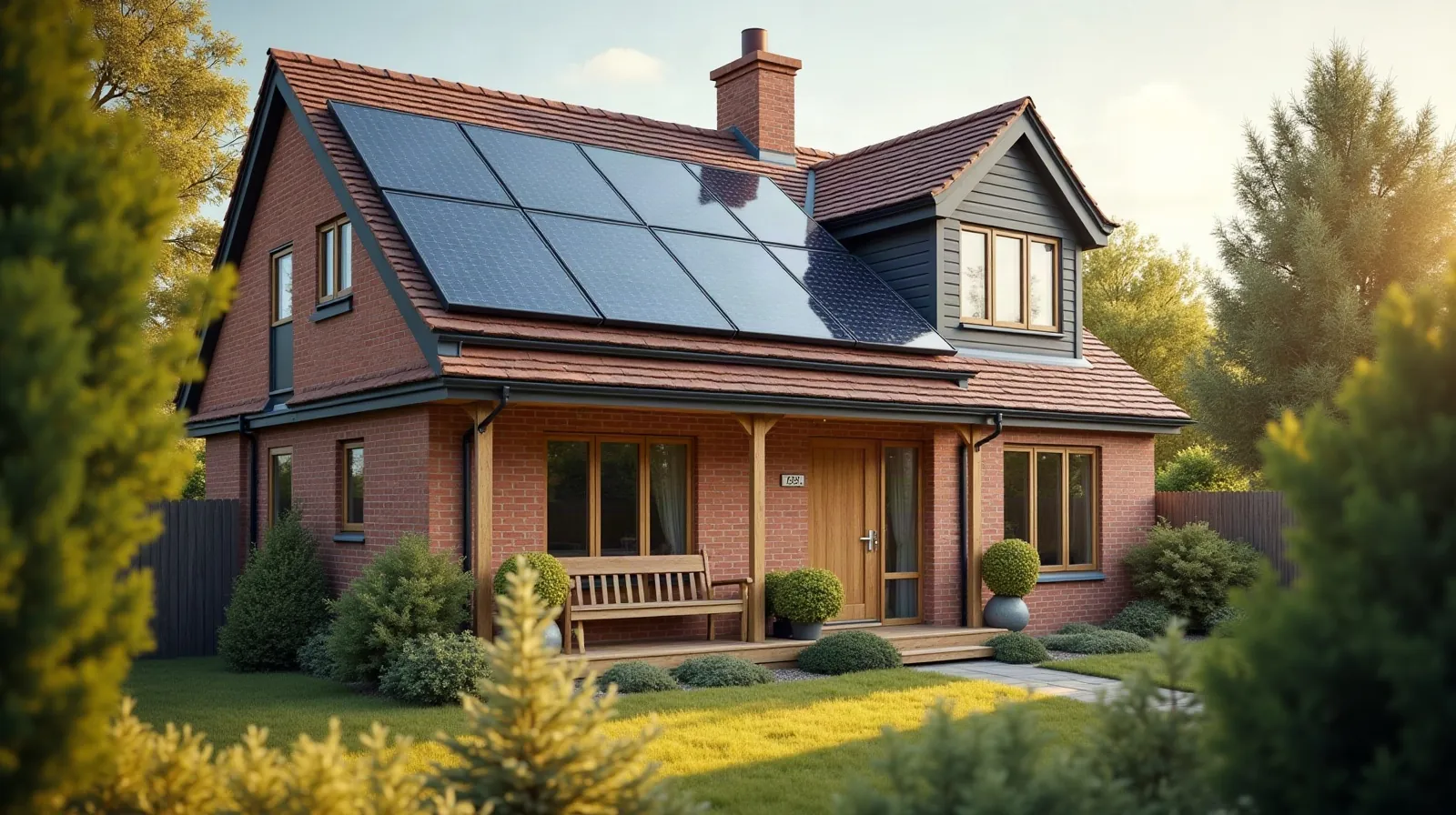
In England, solar panels on houses are usually permitted development under Class A of Part 14, provided they do not protrude more than 0.2 metres beyond the wall or roof slope. Other limits apply to pitched and flat roofs, and tighter rules apply in conservation areas. Always check with your council first.
Solar panels as permitted development
Class A of Part 14 of the Town and Country Planning (General Permitted Development) (England) Order covers solar PV and solar thermal equipment on a house, block of flats or a building within its curtilage. This means that, subject to limits, you may not need to apply for planning permission. The permitted development rights are subject to conditions, including a limit on how far panels can protrude. You should confirm the position with your local council before proceeding.
Solar panels are not permitted development under Class C roof alterations, but they may be permitted development under Part 14. This distinction matters if your project involves other roof work. If you are unsure which class applies, you can ask your local planning authority for guidance. A lawful development certificate from the council can confirm that proposed work is lawful. This provides certainty before you start work.
Pitched roofs
On a pitched roof, solar panels cannot be installed higher than the highest part of the roof, excluding chimneys. This condition applies in addition to the general limit that panels cannot protrude more than 0.2 metres beyond the wall or roof slope. You should measure carefully or ask your installer to confirm that the proposed array meets these limits. If the panels would exceed the limits, planning permission may be required.
The 0.2 metre protrusion limit applies to panels on the wall or roof slope. On a pitched roof, the panels should follow the slope and not stand proud beyond the limit. Your installer should be able to confirm the dimensions of the mounting system. If you are in any doubt, you can seek advice from your local council or a planning professional.
Flat roofs
On a flat roof, solar panels cannot be more than 0.6 metres higher than the highest part of the roof. This is a separate limit from the 0.2 metre protrusion limit that applies to walls and roof slopes. You should check the height of the mounting structure and panels together. If the installation would exceed 0.6 metres above the highest part of the roof, permitted development rights may not apply.
Flat roof installations often use tilted mounting frames, which can increase the overall height. You should ensure that the final height, including the panels and frame, stays within the 0.6 metre limit. Your installer can provide a dimensioned drawing. If the limit is exceeded, you may need to apply for planning permission.
Flats and outbuildings
Class A of Part 14 covers solar PV and solar thermal equipment on a house, block of flats or a building within its curtilage. This means that flats and outbuildings may also benefit from permitted development rights, subject to the same limits. However, the rules can be more complex for flats and buildings within the curtilage of a house. You should check with your local council to confirm what applies to your building.
For a block of flats, the permitted development rights may apply to the building itself, but you should consider who owns the roof and whether consent from the freeholder or management company is needed. For outbuildings within the curtilage of a house, the same limits on protrusion and height apply. If the outbuilding is in a conservation area, tighter rules may apply. Always confirm with the council before installing.
Listed buildings and conservation areas
Article 2(3) land, such as conservation areas, has tighter rules for permitted development. If your property is in a conservation area, you should check with the council whether permitted development rights apply to solar panels. Councils can remove permitted development rights with an Article 4 direction. You should check with the council first to see if such a direction affects your property.
Listed buildings are not covered by the permitted development rights described here. You will need to check with the council for listed building consent and any other permissions. In conservation areas, the tighter rules may mean that planning permission is required for solar panels. A lawful development certificate can confirm whether proposed work is lawful. You should seek advice from the council or a planning professional before proceeding.
Building regulations and installers
Building regulations may apply to solar panel installations, and you should check with your local council or a qualified installer. The planning rules described here are separate from building regulations. Your installer should be able to advise on compliance with building regulations and on the structural suitability of your roof. You should use a competent installer who can confirm that the work meets the relevant standards.
A lawful development certificate from the council confirms that proposed work is lawful. This can be useful if you want certainty before installing solar panels. You should apply to the council for a certificate if you are unsure whether permitted development rights apply. The council can also confirm whether an Article 4 direction removes those rights. Always check with the council before starting work.
General information, not professional advice. Rules vary by council and change over time; check with your local authority or a qualified professional before starting work or buying.
Frequently asked questions
Do I need planning permission for solar panels on my house in England?
Often no, if the panels are permitted development under Class A of Part 14. Limits apply, including a 0.2 metre protrusion limit. Check with your local council first.
How far can solar panels protrude under permitted development?
Panels cannot protrude more than 0.2 metres beyond the wall or roof slope. On flat roofs, they cannot be more than 0.6 metres higher than the highest part of the roof.
Do conservation areas have different rules for solar panels?
Yes, Article 2(3) land such as conservation areas has tighter rules. Councils can also remove permitted development rights with an Article 4 direction. Check with your council first.
What is a lawful development certificate?
A lawful development certificate from the council confirms that proposed work is lawful. You can apply for one if you want certainty before installing solar panels.
Are solar panels permitted development on flats and outbuildings?
Class A of Part 14 covers solar PV and solar thermal equipment on a house, block of flats or a building within its curtilage. The same limits apply, but you should check with your council.
Sources
- The Town and Country Planning (General Permitted Development) (England) Order 2015, Schedule 2 Part 14
- MHCLG permitted development rights for householders, technical guidance
- GOV.UK: Lawful development certificates
Checked 20 November 2026.