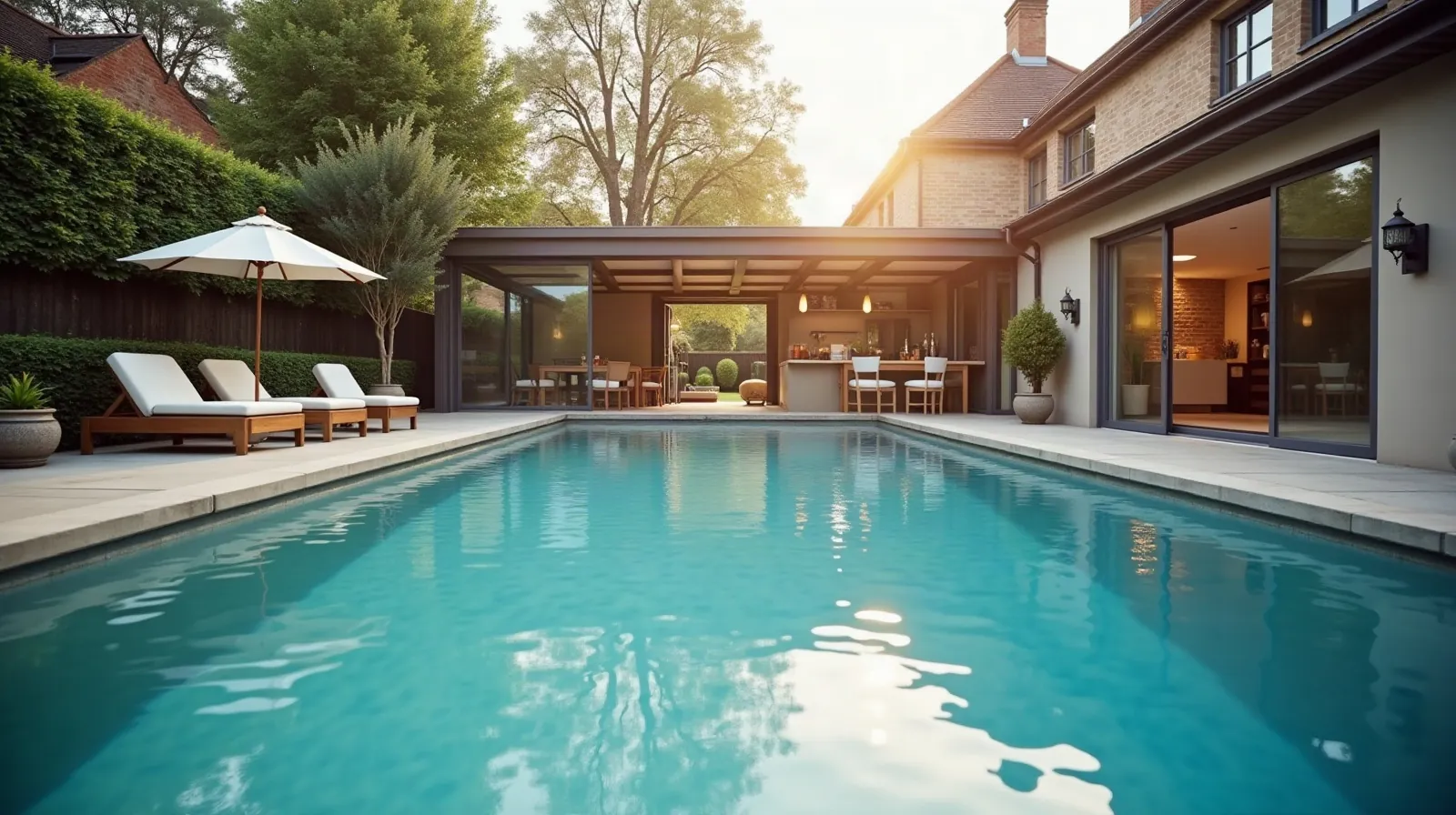
In England, a swimming pool is often permitted development under Class E if it is incidental to enjoying the house. But pools cannot be forward of the principal elevation, and listed buildings always need permission. Check with your council first, as Article 4 directions or previous permissions may have removed these rights.
Pools as permitted development
Class E permitted development covers a swimming or other pool for a purpose incidental to enjoying the house. This means you may not need to apply for planning permission for a pool if it meets the conditions. The rules apply in England and are set out in the General Permitted Development Order. You should check that your project falls within Class E before you start work.
Permitted development rights are not automatic if your property has had them removed. Councils can remove permitted development rights with an Article 4 direction, or earlier permissions may have removed them. You should check with the council first to confirm whether your property still has these rights. If the rights have been removed, you will need to apply for planning permission.
Even if your pool is permitted development, you may want to apply for a lawful development certificate from the council. This certificate confirms that proposed work is lawful. It can be useful if you later sell your home or if there is any dispute about whether the pool needed permission. The certificate is issued by the local planning authority.
Where a pool cannot go
Pools, buildings and containers cannot be on land forward of the principal elevation of the original house. The principal elevation is the front of the house as originally built. This means you cannot put a pool in the front garden if it would be closer to the road than the front wall of the original house. You should identify the principal elevation before planning the pool location.
If your property is in a conservation area, National Park, the Broads, an Area of Outstanding Natural Beauty or a World Heritage Site, tighter rules apply. These areas are known as Article 2(3) land. In these areas, permitted development rights are more restricted, and you may need planning permission for a pool even if it would otherwise be allowed. You should check with the council for the specific rules in your area.
For listed buildings, any building, enclosure or pool within the curtilage of a listed building needs planning permission. This means you cannot rely on permitted development for a pool if your house is listed or if the pool would be within the curtilage of a listed building. You should seek advice from the council's conservation officer before making any plans.
Pool buildings and enclosures
If you want to build a pool building or enclosure, it may also be permitted development under Class E if it is incidental to enjoying the house. However, the same restrictions apply: it cannot be forward of the principal elevation, and it must meet the size limits. You should check the specific rules for outbuildings and enclosures.
Outbuildings within 2 metres of a boundary are limited to 2.5 metres high, with eaves no higher than 2.5 metres. This means if your pool building is close to the boundary, its height is restricted. You should measure the distance from the boundary carefully and ensure the design complies. If the building is further than 2 metres from the boundary, different height limits may apply.
Raised platforms over 0.3 metres high are not permitted development. This means if you plan to have a raised deck or platform around the pool that is higher than 0.3 metres, you will need planning permission. You should consider the height of any platform or decking when designing your pool area. Even a small raised platform can take the project outside permitted development.
Size and the 50% rule
Extensions and outbuildings together cannot cover more than 50% of the land around the original house. This rule applies to the total area of land around the original house, not just the current garden. When calculating the 50%, you must include the area covered by the house itself, as well as any extensions, outbuildings and pools. You should measure the land around the original house to check whether your pool would exceed the limit.
The 50% rule is a key limit for permitted development. If your pool, together with other buildings and extensions, would cover more than half of the land around the original house, you will need planning permission. You should calculate the footprint of all existing and proposed structures. If you are unsure, you can ask the council for advice or hire a planning consultant.
The land around the original house means the curtilage as it existed when the house was first built. Later changes to the property boundary do not change this. You should use the original plot size when making the calculation. If the original house has been extended, the extension counts towards the 50% limit.
Building regulations and electrics
Building regulations approval is separate from planning permission. Changes to electrics near baths or showers and new heating systems can need building regulations approval. If your pool project involves electrical work near the pool or a new heating system, you should check whether building regulations approval is required. This is to ensure safety and energy efficiency.
Building regulations cover many aspects of construction, including structural stability, fire safety, drainage and electrical safety. For a swimming pool, you may need approval for the structure, the drainage, and any electrical installations. You should contact your local building control body before starting work to find out what approvals are needed.
Electrical work near water carries risks, and the building regulations set standards for safety. You should use a qualified electrician who is familiar with the requirements for swimming pools. The electrician can advise on what needs to be done and whether building regulations approval is necessary. Similar checks apply to heating systems, which must meet energy efficiency standards.
Checks before you dig
Before you start digging, you should check with the council whether your property has permitted development rights. Councils can remove permitted development rights with an Article 4 direction, or earlier permissions may have removed them. You should ask the council if any such restrictions apply to your property. This is especially important if you live in a conservation area or other designated area.
You should also check whether your property is a listed building or within the curtilage of one. If it is, you will need planning permission for any pool, building or enclosure. You should contact the council's conservation officer for advice. Even if the pool is not attached to the listed building, it may still be within the curtilage and require permission.
If you are unsure whether your project is permitted development, you can apply for a lawful development certificate. This certificate confirms that proposed work is lawful. It provides certainty and can be useful when selling your home. The council will assess your application against the relevant rules and issue a decision.
You should keep records of any checks and approvals. If you proceed without the necessary permissions, the council can take enforcement action. It is always better to confirm the position before you start work. A planning consultant or solicitor can help if the rules are complex.
General information, not professional advice. Rules vary by council and change over time; check with your local authority or a qualified professional before starting work or buying.
Frequently asked questions
Do I need planning permission for a swimming pool in England?
Often no, if it is permitted development under Class E and meets the conditions. But you cannot put it forward of the principal elevation, and listed buildings always need permission. Check with your council first.
Can I put a pool in my front garden?
No, if it would be on land forward of the principal elevation of the original house. Pools, buildings and containers cannot be in that area under permitted development. You would need planning permission.
Does a pool building need planning permission?
It may be permitted development if it is incidental to enjoying the house and meets size limits. But if it is within 2 metres of a boundary, it is limited to 2.5 metres high. Check with the council.
What is the 50% rule for pools?
Extensions and outbuildings together cannot cover more than 50% of the land around the original house. Your pool counts towards this limit. If the total exceeds 50%, you need planning permission.
Do I need building regulations approval for a pool?
Possibly, for electrics near baths or showers and new heating systems. Building regulations approval is separate from planning permission. Check with your local building control body before starting work.
Sources
- MHCLG permitted development rights for householders, technical guidance
- GOV.UK: Building regulations approval
- GOV.UK: Lawful development certificates
Checked 20 November 2026.